WPO Social Science Program September Series: Federal Financial Assistance
The National Oceanic and Atmospheric Administration (NOAA) Weather Program Office (WPO) Social Science Program (SSP) is pleased to announce the next session in our annual…


Recent societal impacts from hurricanes, floods, snow storms, and wildfires, shows a great need to understand the intersection of people and meteorology. The Social Science Program funds research that plays a critical role in connecting the improvements of NOAA’s weather forecast information to the public’s growing forecast needs.
Our team works across the public, private, and academic sectors of the weather community to find and fund research to meet these goals and improve forecast delivery for the public. Through our Notice of Funding Opportunities, we select research proposals to meet our program objectives. Those objectives are based on priorities and critical areas for forecast improvement.

The National Oceanic and Atmospheric Administration (NOAA) Weather Program Office (WPO) Social Science Program (SSP) is pleased to announce the next session in our annual…

“Historically, we have tended to reward the papers that come from data collection more than the data themselves. But I think there is a growing…

The NOAA Weather Program Office (WPO) Social Science Program (SSP) is excited to announce the SSP Data Forums, a two-part virtual forum series as…
Collectively, these projects utilize innovative mixed-methods approaches to understand a variety of decision-making and communication processes in response to hazardous weather. This includes (but is not limited to) examining population mobility; bridging AI, forecasting, and human systems data; investigating how businesses prioritize weather information; and enhancing extreme cold decision support.

The Research Explorer for Articles, Code, and Hosted Data (REACH) is WPO’s open science resource, connecting practitioners, scientists, policymakers, and the public to nearly 1,000 research outputs to date produced through WPO-funded research. These resources include journal articles, code, data, and tools. Developed by WPO’s Portfolio Analysis and Research Transitions…

In response to the Office of Oceanic and Atmospheric Research (OAR) and National Weather Service (NWS) bi-lateral meeting 2021, the WPO Forecasting A Continuum of Environmental Threats (FACETs) Program funded a project to assess the current program and plan for a future iteration of the program.

To advance NOAA’s social science data needs, WPO’s Social Science Program partnered with the National Hazard Center—with support from the National Science Foundation, and in collaboration with the National Weather Service and National Severe Storms Laboratory— to develop the Weather Ready Quick Response Research Initiative to support social science event-based…

Lead Principal Investigator & Affiliation:
Co-Principal Investigator(s):
This project aims to create a scientifically rigorous and operationally feasible (i.e., could be deployed by National Weather Service Weather Forecast Offices) survey system for collecting data on the publics’ perception and response to four different hazards: tornadoes, severe thunderstorms (i.e., those with winds over 70 miles per hour), flash floods, and winter weather. The…

Lead Principal Investigator & Affiliation:
Co-Principal Investigator(s):
This project aims to understand how populations with limited English Proficiency receive, interpret, and respond to extreme weather event emergency information. Planned outputs of this work will improve emergency alert system messages for these communities as well as reduce barriers to receiving life-saving information more broadly across the general public. Click here for more details.…

Lead Principal Investigator & Affiliation:
Co-Principal Investigator(s):
Using mixed-methods, this project will interview and survey small businesses across Mississippi. Information gleaned will help better understand how businesses more broadly in the southeastern United States receive their hazardous weather information and then perceive, integrate, and prioritize it in their protective action decisions for patrons and employees during severe weather. Click here for more…

Lead Principal Investigator & Affiliation:
Co-Principal Investigator(s):
This project will use a natural-human system model (FLEE) along with agent-based models to simulate decision-making of emergency managers and households under evolving hurricane risks. This research will inform understanding of hurricane evacuation outcomes resulting from interactions between forecast information, people, and the built environment, which will enable impact-based forecast verification. Click here for more…

Lead Principal Investigator & Affiliation:
Co-Principal Investigator(s):
Through immersive technologies and community-based research, this project will develop actionable and sustainable weather solutions that communicate risk and motivate preparatory and protective action among the public. This team will also deliver a collection of mixed- and virtual-reality hazardous weather simulations to help users learn about and take protective actions. Click here for more details.…

Lead Principal Investigator & Affiliation:
Co-Principal Investigator(s):
By combining high-resolution health and hurricane data with state-of-the-art econometrics, this project aims to quantify the health impacts of hurricanes (beyond mortality) and evaluate how accurate and timely hurricane forecasts can mitigate these impacts. This replicable methodology will enable agencies to better perform socio-economic health benefit assessments of other forecast products. Click here for more…
Lead Principal Investigator & Affiliation:
Co-Principal Investigator(s):
This project addresses gaps in understanding operational workflows, forecast product usage, and real-time responses to extreme weather. The team will compare product development across parts of NWS NCEP and use longitudinal surveys and social network analysis to study perceptions, decision-making, and information flow within vulnerable communities. Click here for more details… Short Description: This project…

Lead Principal Investigator & Affiliation:
Co-Principal Investigator(s):
Through intensive regional partner engagement, this work will develop a proof-of-concept ColdRisk decision support tool, which will address unmet forecast and community needs. The project integrates local health impacts, locally tailored risk reduction strategies, and recommendations decision-makers can use for preparing and responding to extreme cold events in Washington State. Click here for more details…

Lead Principal Investigator & Affiliation:
Co-Principal Investigator(s):
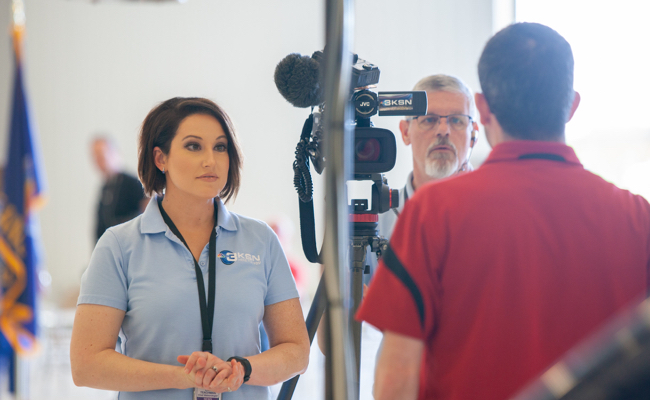
This project combines mobility and survey data to study how people move and respond to information during hazardous weather events. The team will create a database of hurricane, wildfire, and flash flood hazard information, which will be a resource for emergency managers and inform future weather warning systems and decision-making. Click here for more details.…
Lead Principal Investigator & Affiliation:
Co-Principal Investigator(s):
Despite the high mortality rate from extreme heat and extensive research on its physiological impacts, a notable gap exists in understanding how heat and its associated risks and recommended protective actions are communicated–especially among pregnant people. This research addresses that gap by exploring how English- and Spanish-speaking pregnant people access and use extreme heat information.…

Lead Principal Investigator & Affiliation:
Co-Principal Investigator(s):
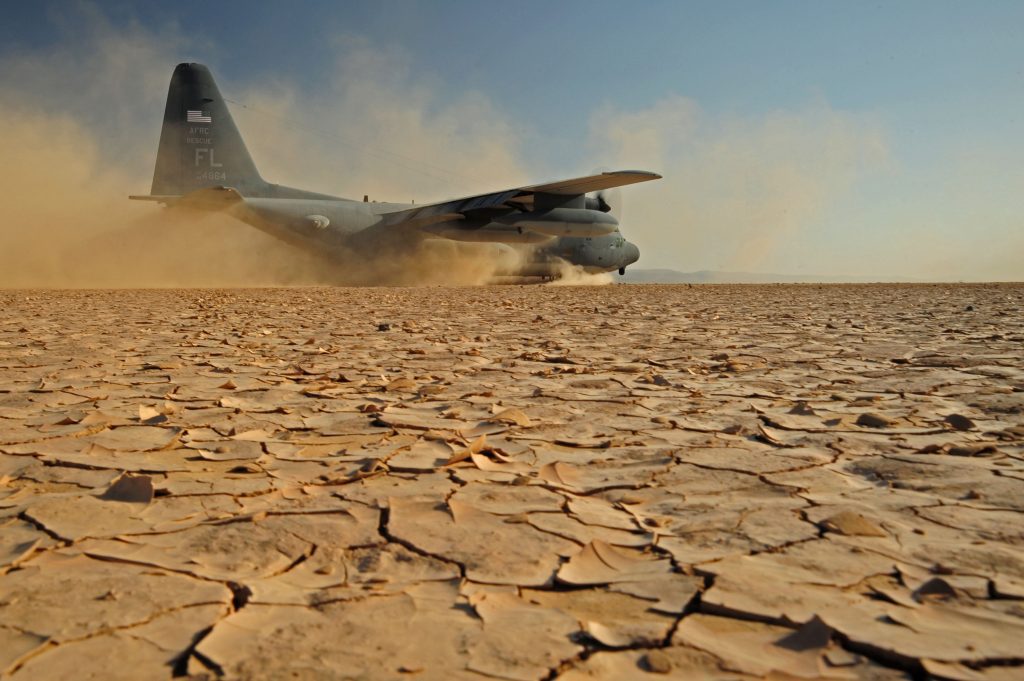
People who are deaf and hard-of-hearing (D/HOH) require specific adaptations for emergency communications to be effective and actionable, but knowledge about how to best serve this group in weather emergencies is largely lacking. This mixed methods project will illuminate D/HOH communication needs and prototype an intervention model for specific warning system processes for the D/HOH…
Lead Principal Investigator & Affiliation:
Co-Principal Investigator(s):
This research study aims to improve National Weather Service (NWS) heat communication. Through a mixed-methods approach, researchers will generate a national baseline assessment of how people access NWS heat information, and determine the extent of the public’s knowledge and understanding of heat risks, impacts, and vulnerabilities.
Lead Principal Investigator & Affiliation:
Co-Principal Investigator(s):
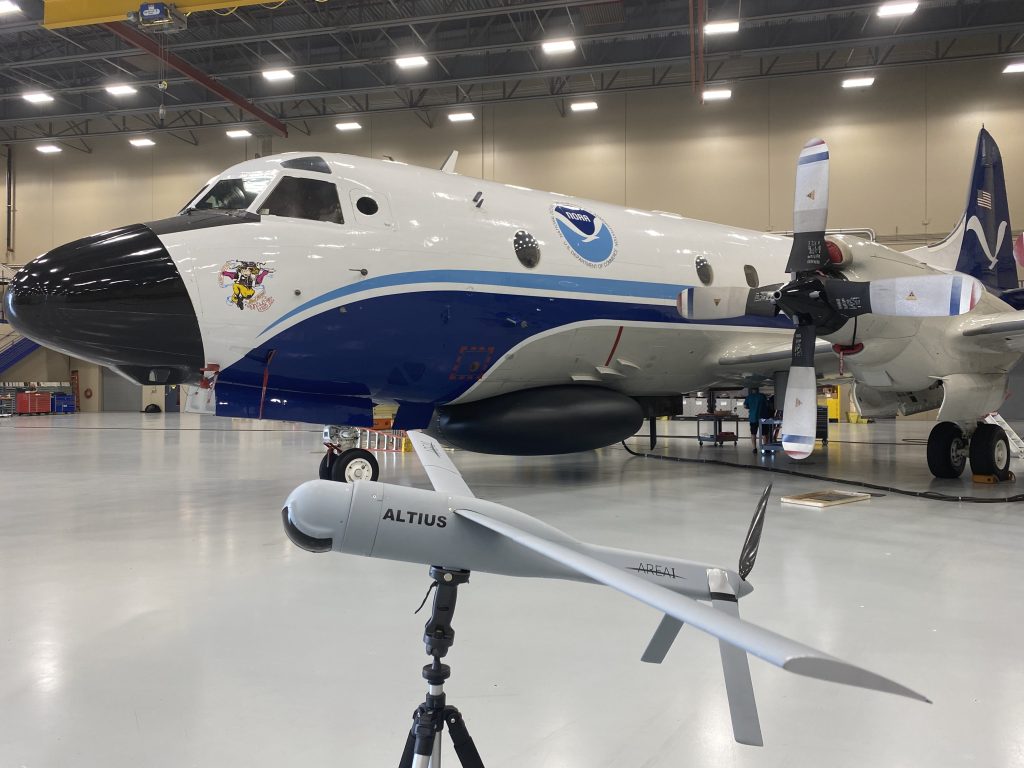
This research project aims to estimate the socio-economic benefits from augmented aircraft hurricane observations (AO) and advance methodologies for cost-benefit assessments. A statistical analysis linking the occurrence of different AO types to hurricane forecast performance will be evaluated. The information gathered from this research project will be useful for additional forecasting observation systems and new…
Lead Principal Investigator & Affiliation:
Co-Principal Investigator(s):
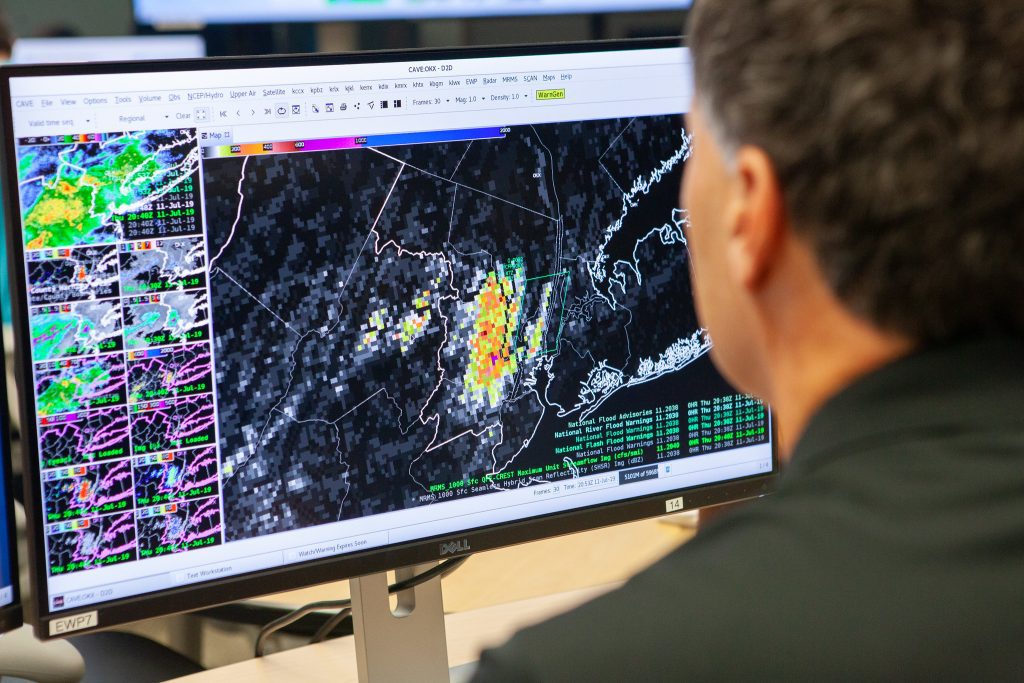
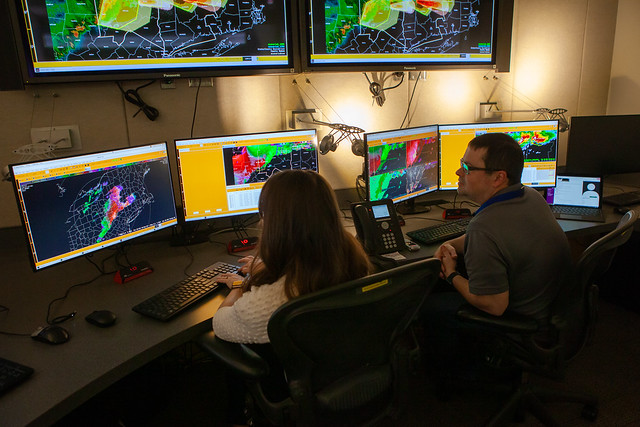
National Weather Service (NWS) Meteorologists use data from the Storm Prediction Center (SPC) to create severe weather forecast graphics and information customized to their local area. However, these forecasts often lack the temporal specificity needed by local decision-makers. This research project aims to improve SPC’s new graphical product, called Severe Timing Guidance, using feedback collected…
Lead Principal Investigator & Affiliation:
Co-Principal Investigator(s):
Brief Vulnerability Overview Tool (BVOT) is crucial for tailored weather messaging and emergency preparedness. It can provide meteorologists and emergency managers consistent spatial-situational awareness of critical social vulnerabilities. This research project involves refining their established methodologies for collecting operationally-actionable vulnerability information. Ultimately, the goal is to train forecasters how to set up BVOTs independently.
Lead Principal Investigator & Affiliation:
Co-Principal Investigator(s):
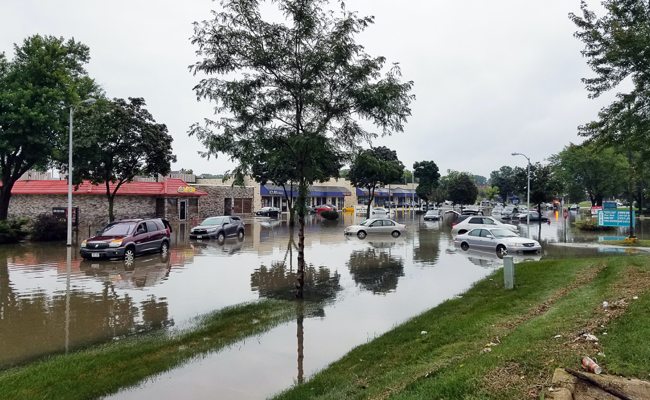
Flood inundation maps (FIM) are a common visual way to communicate flood risk, but there is little research on such products. This mixed-methods research project will use focus groups and surveys to explore how FIM products support flooding decision-making among professional users and the general public to improve FIM product delivery and design.
Lead Principal Investigator & Affiliation:
Co-Principal Investigator(s):
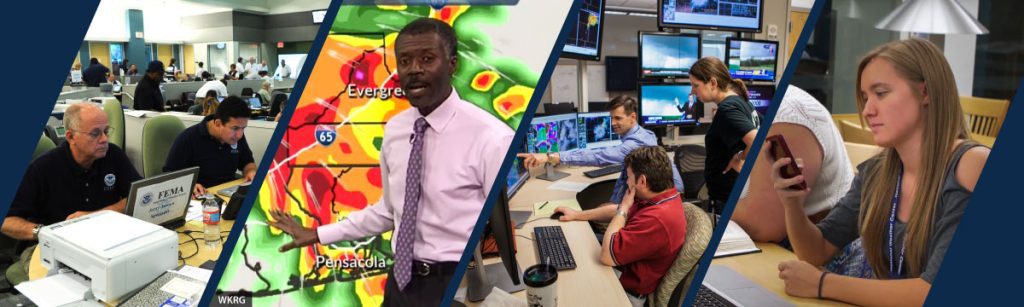
The goal of this project is to document the challenges and nuances that broadcasters who serve Spanish-speaking populations face in generating translated risk information and naming conventions for compound, multi-hazard tropical events. Qualitative findings from broadcast meteorologists will enable NWS partners in Spanish-speaking and bilingual broadcast meteorology markets to better convey multi-hazard risks to Spanish-speaking…


Guide to Choosing a Data Repository (Updated December 2023)
Weather Ready Instrument and Data Publications (2021) – This special call for Weather Ready Research with the Natural Hazard Center supported the publication of social science and multidisciplinary data, data collection instruments, and research protocols for natural hazards and disaster research via the DesignSafe CyberInfrastructure.

NOAA’s Office of Performance, Risk, and Social Science
NOAA’s National Weather Service – Social Science Page
NOAA’s Office for Coastal Management Digital Coast
NOAA’s Social Science: Vision and Strategy
NOAA’s Practical Guide for Natural Hazard Risk Communication
Practical Guide for Natural Hazard Risk Communication and Executive Summary

SBES Data Engagement Coordinator
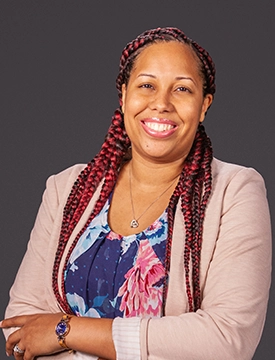
Social Science Deputy Program Manager

IT Project Manager

SBES Data Integration and Partnership Analyst
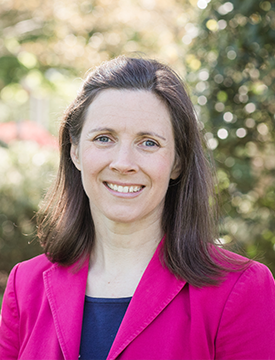
Social Science Program Manager

Social Science Program Analyst

Severe Weather Social Scientist

Bibliographies
Annotated Bibliographies
If you are unfamiliar with an annotated bibliography, it is a list of citations to books, articles, and documents about a certain topic. The purpose of these bibliographies is to increase awareness of journal articles that exist on a certain topic by pulling together a variety of journal articles in one place.
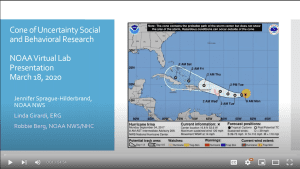
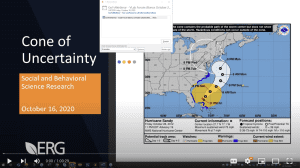
Bibliography on Uncertainty and Probability Communication
Bibliography on Tornado Warnings: Delivery, Economics, and Public Perception
Bibliography on Social Science and Fire Weather (Coming Soon)
Uncertainty and Probability Communication: Past, Present, and Future (AMS 2020)